
Box Build Testing & Quality Verification
WHAT WE DO
Testing at Every Stage of the Box Build
From board-level inspection to final functional test
Quality isn’t a step at the end of a box build — it’s layered through the whole process. The boards that go into your product are inspected before they’re ever installed. The harnesses are pull-tested and continuity-tested. And the completed assembly is functionally tested against your requirements before it ships. That layered verification is how we make sure the unit that leaves our floor is the unit that performs in the field.
The goal is simple: catch the defect here, where it costs a rework, instead of in the field, where it costs a truck roll, a line-down event, and a customer’s trust.
Ask about our testing capabilities for your product.
TESTING CAPABILITIES
Electronic Functional Testing Services
Verifying real-world performance before shipment
We build test into the process at the level your product demands:
- Functional testing — custom test procedures developed to your specification, verifying power-up, inputs and outputs, and real-world performance of the completed assembly
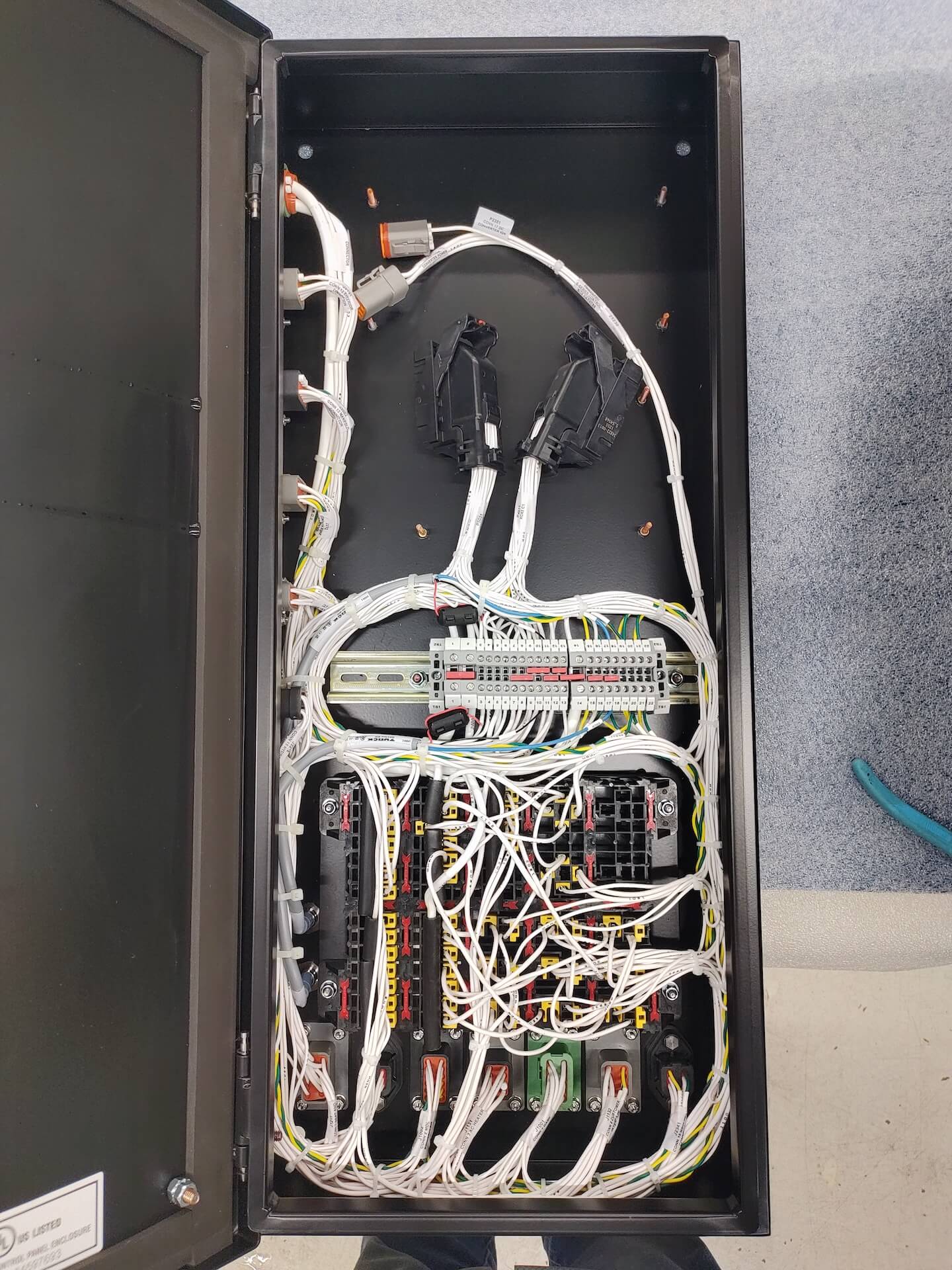
- Continuity and electrical testing — every harness and panel connection verified against the print
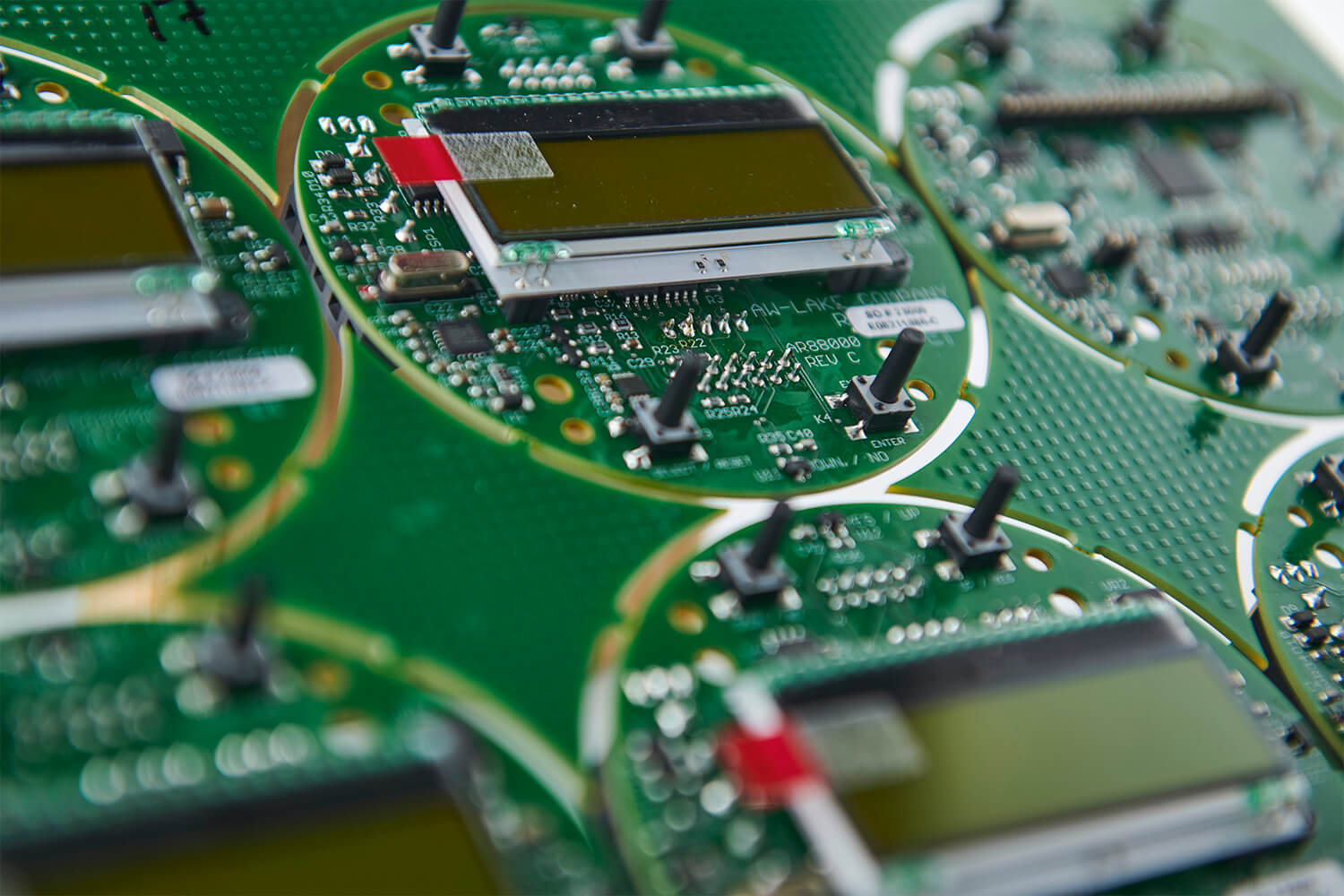
- 3D Automated Optical Inspection (AOI) — every board inspected in real time for correct placement and solder quality
- In-house X-ray inspection — verifying BGAs, LGAs and other hidden solder joints that optical inspection can’t reach
- In-house hipot / dielectric-withstand testing — verifying insulation integrity and high-voltage electrical safety
If your product calls for a test method not listed here, send us your specification — our engineering team will tell you straight whether it’s something we perform in-house or coordinate through a qualified partner.

Talk to us about your requirements and project goals!
PROCESS
Test Development & Documentation
Built around your specification, documented for traceability
Testing requirements are captured up front, during quoting and NPI, alongside your BOM and performance criteria. From there our engineers develop the fixtures and procedures needed to verify your product, and every result is documented for full traceability. When something needs to change, it’s handled through an Engineering Change Notice so nothing slips through undocumented. It’s the same documentation-first discipline we apply to every build — the kind that keeps quality repeatable, lot after lot.
WHY IT MATTERS
The Cost Savings of Getting Quality Right
Catching a defect early is far cheaper than a field failure
There’s an old rule of thumb in electronics manufacturing: a defect caught at inspection costs a fraction of one caught at final test, which costs a fraction of one caught in the field. Robust testing isn’t overhead — it’s the cheapest insurance you can buy against warranty claims, recalls, and downtime. Our customers notice the difference. As one put it after a recent shipment of box builds: “These chassis were very close to perfection. Please let everyone at your facility know we are very satisfied.”
Box Build Testing FAQs
Testing is layered through the build: board-level inspection with 3D AOI and X-ray, continuity testing on wired connections, and functional testing of the completed assembly against your requirements. The exact test plan is tailored to your product and specification.
Yes. We develop fixtures and procedures to your spec and verify each unit before it ships. If you have an existing test procedure, we’ll build to it; if you don’t, we can help define one.
Functional testing powers up the finished assembly and confirms it behaves the way it’s supposed to in use. In-circuit testing checks individual components and connections at the board level. They answer different questions, and the right mix depends on your product and volume — talk to us about your requirements.
Yes. Results are documented and changes are tracked through Engineering Change Notices, so you have a clear record for quality and regulatory needs.
IPC-A-610 Class II and III workmanship, an ISO 9001:2015 quality management system, and your product’s own specification.