3D Automated Optical Inspection (AOI) for PCB Assembly Quality Assurance
QUALITY FIRST
3D AOI for Reliable PCB Inspection
Full-Board Verification for High-Reliability Assemblies
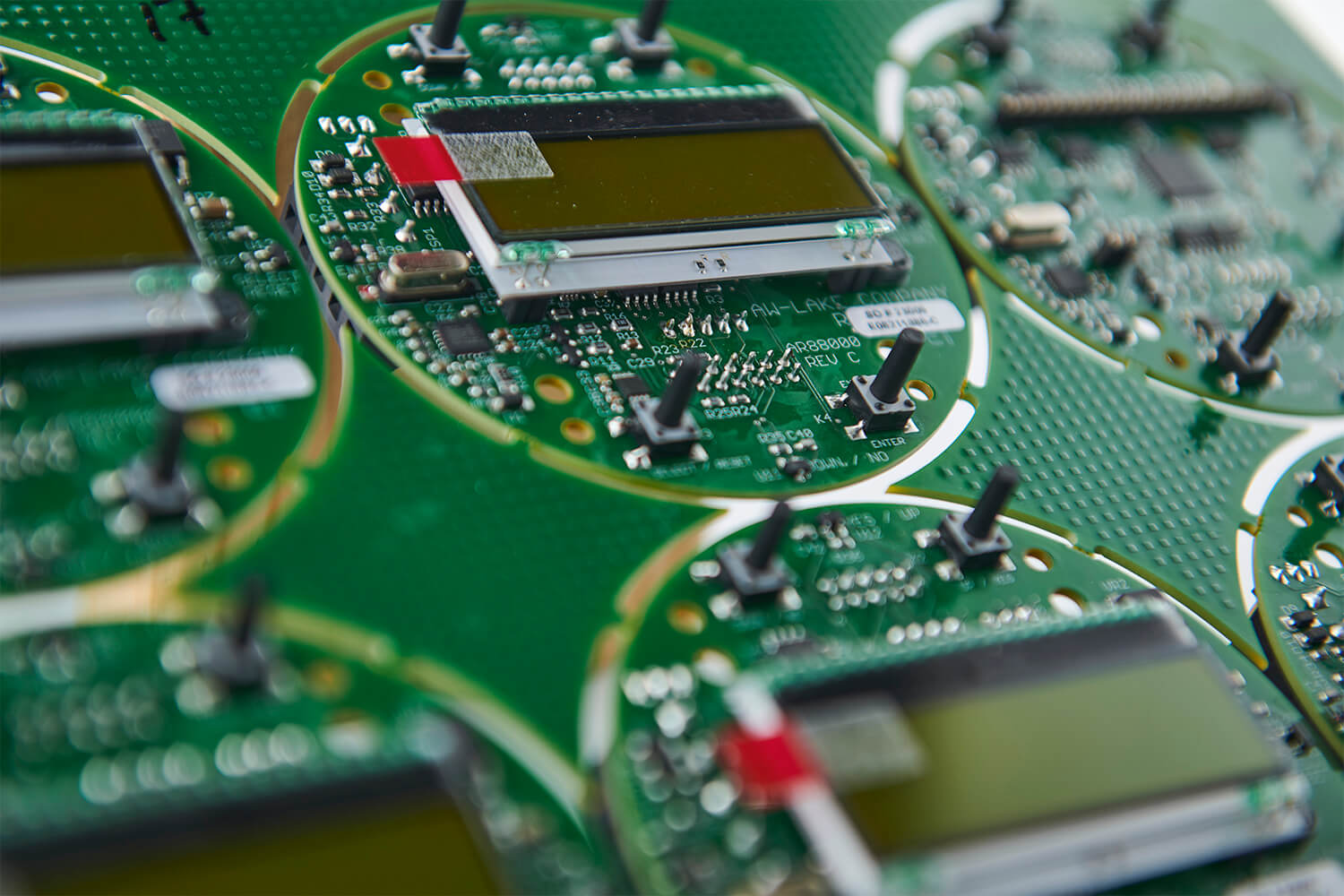
Quality in PCB assembly is not something you inspect in at the end. It is something you build in at every step and verify continuously along the way. At ETI, our 3D Automated Optical Inspection system is a primary quality gate in our PCBA process, evaluating every board after reflow with a level of speed, consistency, and three-dimensional detail that no human inspection process can match at production volumes.
WHY IT MATTERS
Why 3D AOI Is the Standard for High-Reliability PCB Inspection
Deeper Visibility Into Assembly Quality
For engineering managers specifying assemblies for medical devices, aerospace systems, industrial controls, or any application where field failures carry real consequences, the inspection methodology your contract manufacturer uses is not a secondary concern. It is a direct input to the reliability profile of your end product.
Traditional 2D optical inspection systems capture top-down images of assembled boards and compare them against a reference. They are fast and useful for obvious defects such as missing components, gross misplacements, and visible bridging, but they have a fundamental limitation: they cannot measure height. A component that appears correctly placed in a 2D image may still have insufficient solder under it, a lifted lead, or a joint that is present but not properly formed.
ETI uses an OMRON VT-S730 3D AOI system equipped with five cameras. The system uses 3D reconstruction through phase shift technology and color highlighting to create a detailed three-dimensional view of solder joints, component bodies, and leads across the board. Height, geometry, coplanarity, and solder-related characteristics are measured, not just visually checked. The result is a far more complete picture of assembly quality, including defect modes that 2D systems and manual inspection can miss.
HOW IT WORKS
How ETI’s 3D AOI Process Works
Inspection Built Into Production

Programming and Reference Establishment
Before a new assembly enters production, our AOI system is programmed with the board’s component library, placement coordinates, and inspection tolerances. Reference data such as correct component orientation, acceptable solder joint geometry, and pad coverage thresholds is established and validated against a known-good board. This upfront programming work helps make production-run inspection fast, accurate, and consistent.

Full-Board 3D Inspection After Reflow
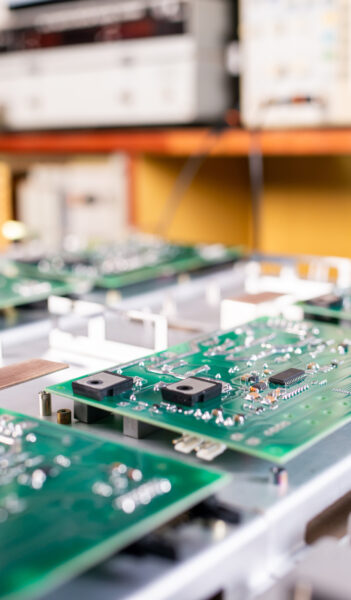
Every production board is inspected 100%, with no sampling and no skipped areas on low-risk portions of the board. After reflow, the AOI system scans the populated surface of each board and evaluates component presence, orientation, lead position, coplanarity, and solder-related dimensional characteristics at each programmed inspection point. Any measurement outside the established tolerance window is flagged for review.

Defect Detection Across Critical Failure Modes
Our 3D AOI process is designed to identify a broad range of SMT assembly defects, including solder bridges, insufficient solder, missing components, wrong components, component misalignment, lifted leads, coplanarity failures, and polarity reversals. Three-dimensional inspection adds the ability to detect joint geometry issues that are much harder to evaluate with 2D inspection alone, particularly on dense and high-reliability assemblies.

Operator Review and Disposition
Flagged boards are reviewed by IPC-certified operators who make accept/reject decisions based on IPC-A-610 Class II or Class III criteria, depending on your application requirements. Accepted anomalies are documented. Rejected boards are dispositioned for rework or further analysis. Every inspection result, whether pass or fail, is logged and traceable to the individual board.

Feedback Into the Upstream Process
AOI results do more than drive board disposition. They also support process improvement. When the system identifies a recurring defect pattern tied to print parameters, placement variation, or reflow profile conditions, that information can be fed back upstream to address the root cause. This closed-loop approach strengthens process control and helps prevent repeat defects.
CORE BENEFITS
3D AOI Benefits for Complex, High-Reliability Assemblies
Better Defect Detection, Better Process Control
Defect Detection That 2D Inspection Misses
One of the most important advantages of 3D AOI in high-reliability electronics manufacturing is its ability to detect joint geometry defects that are difficult or impossible to verify in two dimensions alone. Issues such as lifted leads, inadequate solder formation, and subtle coplanarity problems are easier to catch when height and shape are part of the inspection criteria.
100% Inspection at Production Speed
3D automated optical inspection allows fully populated boards to be inspected far faster than manual visual inspection while maintaining consistency from board to board. Every assembly receives the same level of scrutiny, whether it is the first board in a run or the last.
Objective, Measurable Quality Data
Unlike manual visual inspection, 3D AOI generates quantitative inspection data. That supports stronger documentation, more consistent decision-making, and better visibility into process performance over time. It also helps support customer reporting and the objective quality evidence expected in regulated industries.
IPC-A-610 Class II and III Compliance
ETI’s 3D AOI process is aligned to IPC-A-610 Class II and Class III acceptance criteria. For customers in medical, aerospace, industrial, and other high-performance sectors, that means the inspection process is built around the workmanship standards their applications require.
PROCESS FIT
Where 3D AOI Fits in ETI’s Integrated PCBA Process
Connected to the Full Quality Workflow
PCB assembly AOI at ETI is not a standalone quality gate added at the end of the line. It is an integrated step within a broader process architecture designed so each stage validates the one before it.
Boards arrive at AOI from reflow with documented process inputs and a known component placement record. The 3D AOI system evaluates the outcome of those earlier steps. Any defects it identifies can be traced back to a specific process stage, parameter set, and production window because those activities are controlled within our ISO 9001:2015-certified quality system.
For defects that 3D AOI cannot fully evaluate, such as hidden BGA joints, through-hole solder penetration, or internal voiding, boards can be routed to our in-house X-ray inspection system. These technologies work together. AOI provides fast, full-surface inspection coverage, while X-ray adds visibility into hidden or internally obscured solder joints.
AT A GLANCE
Key Benefits Summary
A Faster Look at the Value
Complete Surface Coverage
Every joint, every component, every board inspected with 100% coverage and no sampling compromises.
Three-Dimensional Joint Measurement
Height, geometry, and coplanarity evaluated through 3D measurement for deeper inspection capability than 2D-only systems.
Closed-Loop Process Feedback
Inspection results support upstream process correction, helping address root causes rather than only catching finished defects.
Seamless Path to X-Ray
Boards that require deeper inspection can move directly to ETI’s in-house X-ray system for additional analysis.
Documented, Auditable Results
Inspection outcomes are logged and traceable to support demanding quality documentation requirements.