
In-House X-Ray Inspection for PCB Assembly Verification
BUILT FOR ACCURACY
A Unified View of Quality: X-Ray in Our Integrated Inspection Architecture
Some of the most critical solder joints on a modern PCB are the ones you can’t see. BGA packages, QFN devices, bottom-terminated components, and dense through-hole assemblies all have joints that are hidden from optical inspection — present on the board, but inaccessible to cameras, light, or the human eye. For assemblies going into medical devices, aerospace systems, industrial controls, or any application where joint integrity is non-negotiable, optical inspection alone isn’t enough.
At ETI, our in-house X-ray inspection capabilities give our quality team direct visibility into the joints that matter most — without sending boards to an external lab, without adding lead time, and without breaking the chain of custody on your assembly.
WHY IT MATTERS
Why In-House X-Ray Inspection Is a Differentiator — Not a Standard Offering
X-ray inspection capability is not universal among contract PCB assemblers. Many mid-tier shops either lack the equipment entirely or rely on external labs for X-ray analysis—adding days to the inspection cycle, introducing handling risk, and creating a gap between the team that built the board and the team interpreting the results.
ETI’s in-house X-ray system eliminates that gap. Using a high-resolution, manually operated system, our team performs real-time inspection of critical features such as BGA solder joints, bottom-terminated components, and hidden interconnects. When a board requires X-ray analysis—whether as a standard step in the inspection flow, a response to an AOI flag, or a first-article verification requirement—it stays on our floor, in the hands of our team, with results available the same day.
Because the system is operator-controlled, our inspectors can dynamically adjust magnification, viewing angles, and inspection focus based on the specific board design and risk areas—rather than relying on rigid, pre-programmed routines. That flexibility is especially valuable for complex, mixed-technology assemblies where defect modes aren’t always uniform.
For engineering managers working against a product launch schedule or a customer delivery commitment, that difference is measurable in real time—faster feedback, tighter process control, and fewer delays between build, inspection, and corrective action
What X-Ray Inspection Reveals That Optical Inspection Cannot
Three-dimensional AOI is ETI’s primary surface inspection tool and it’s exceptionally capable — but it operates on what’s optically accessible. X-ray inspection sees through component bodies, substrates, and solder masks to evaluate joint quality at the connection point itself. This makes it the only viable inspection method for several critical component and defect categories.
BGA X-Ray Inspection
Ball grid array packages place their entire solder joint array underneath the component body — completely hidden from any optical system. BGA X-ray inspection is the standard method for evaluating ball formation, detecting bridging between adjacent balls, identifying missing balls, measuring void content within individual joints, and confirming collapse height after reflow. For any assembly carrying BGA devices, X-ray isn’t optional — it’s the only way to know the joints are good.
QFN and Bottom-Terminated Components
QFN packages, LGA devices, and other bottom-terminated components present the same optical access problem as BGAs. The thermal pad — often the most electrically and thermally critical connection on the device — is entirely hidden. X-ray solder joint inspection provides void percentage measurement on thermal pads, directly relevant to thermal performance and long-term reliability.
Through-Hole Solder Penetration
IPC-A-610 specifies minimum solder fill requirements for through-hole joints — typically 75% barrel fill for Class II and the full barrel for Class III. Visual inspection of through-hole joints evaluates the topside fillet but can’t confirm what’s happening inside the barrel. X-ray inspection of through-hole joints provides cross-sectional visibility into barrel fill, verifying that the joint meets specification depth — not just surface appearance.
Solder Void Analysis
Voids within solder joints — gas pockets trapped during reflow — are invisible to optical inspection but directly measurable by X-ray. For high-reliability applications, void percentage in critical joints is a meaningful quality metric. ETI’s X-ray capability allows void analysis against IPC or customer-specified acceptance criteria, providing objective data rather than a visual estimate.
HOW IT WORKS
How ETI’s X-Ray Inspection Process Works

Trigger Points for X-Ray Inspection
X-ray inspection at ETI is applied at defined trigger points within our quality process. First article inspections on new assemblies, boards carrying BGA or bottom-terminated devices, assemblies flagged by AOI for potential hidden defects, and customer-specified X-ray requirements all route boards to X-ray as a standard process step.

Sampling Strategy for BGA Assemblies
For BGA-containing assemblies, X-ray is typically performed on an initial sample set—often the first 5–10 boards off the line—to validate process quality before full production continues. Full 100% X-ray inspection is available when required, but is typically driven by customer specifications, application criticality, or regulatory requirements. For assemblies in regulated industries where X-ray records form part of the quality documentation package, inspection scope is defined and executed at the lot or unit level as specified.

Inspection and Analysis
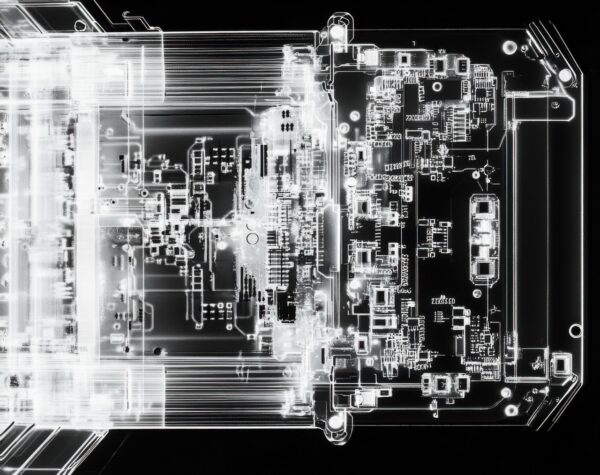
Our X-ray system generates high-resolution images of the assembly’s internal structure. Trained operators evaluate BGA ball formation, void content, bridge detection, through-hole fill, and any anomalies identified during AOI review. Analysis is performed against IPC-A-610 Class II or Class III criteria, depending on the application, with customer-specific acceptance standards applied where required.

Documentation and Reporting
Inspection results are fully documented and traceable to the specific board, lot, and inspection date. For customers in medical, aerospace, and other regulated industries, X-ray inspection records are incorporated into the assembly’s quality documentation package—supporting audit readiness, customer review, and regulatory submission.
Where X-Ray Fits in ETI’s Integrated Inspection Architecture
ETI’s inspection process is layered by design. No single inspection method catches everything — and no well-engineered quality system relies on one. Our 3D AOI system provides comprehensive surface inspection and thermal analysis at production speed, evaluating every joint, component, and lead on the board’s accessible surfaces. X-ray inspection extends that coverage into the hidden geometry that optical systems can’t reach.
The two systems are complementary and sequential. Boards exit AOI with surface quality confirmed. Those requiring deeper analysis — either by process rule or by AOI flag — proceed directly to X-ray within the same facility. Our quality team interprets both datasets on the same board, giving them a complete picture of assembly quality without the ambiguity of results generated by two different organizations interpreting two different data sets.
For assemblies where neither AOI nor X-ray can provide a definitive answer — suspected internal delamination, cross-sectional confirmation of unusual structures, or failure analysis on a field return — the same in-house capability that supports production inspection supports engineering investigation. You’re not waiting for an external lab report to understand what happened to your board.
PROJECT BENEFITS
Key Benefits of ETI’s In-House X-Ray Capabilities
Visibility Into Hidden Joints
BGA balls, QFN thermal pads, through-hole barrel fill, and internal void content are all measurable by X-ray — giving ETI’s quality team definitive data on the joint types most likely to produce latent field failures.
Same-Day Results, No External Lab
In-house capability means X-ray analysis happens on ETI’s floor, on ETI’s schedule, with results available the same day the board is flagged. No shipping, no third-party handling, no added lead time.
Direct Integration With AOI
AOI and X-ray results are interpreted together by the same quality team on the same assembly — providing a complete, unified view of board quality rather than disconnected data from separate organizations.
Regulatory-Grade Documentation
Inspection records, image archives, and disposition documentation support the quality evidence requirements of medical device, aerospace, and other regulated industry customers — including design history files, first article inspection reports, and ongoing production records.
Process Improvement Input
X-ray findings on void content, BGA collapse uniformity, and through-hole fill consistency feed back into ETI’s reflow and soldering process parameters — the same closed-loop improvement philosophy that drives our AOI feedback process.

Ready to Discuss Inspection Requirements for Your Assembly?
If your boards carry BGA devices, bottom-terminated components, or through-hole assemblies with Class III fill requirements — or if you’re simply evaluating contract manufacturing partners on the depth of their quality infrastructure — ETI’s team is ready to walk you through our inspection capabilities in detail.